






.webp)
.svg)
Google Just Opened Healthcare Ads to AI Mode. Here’s What Dental Practices Need to Know
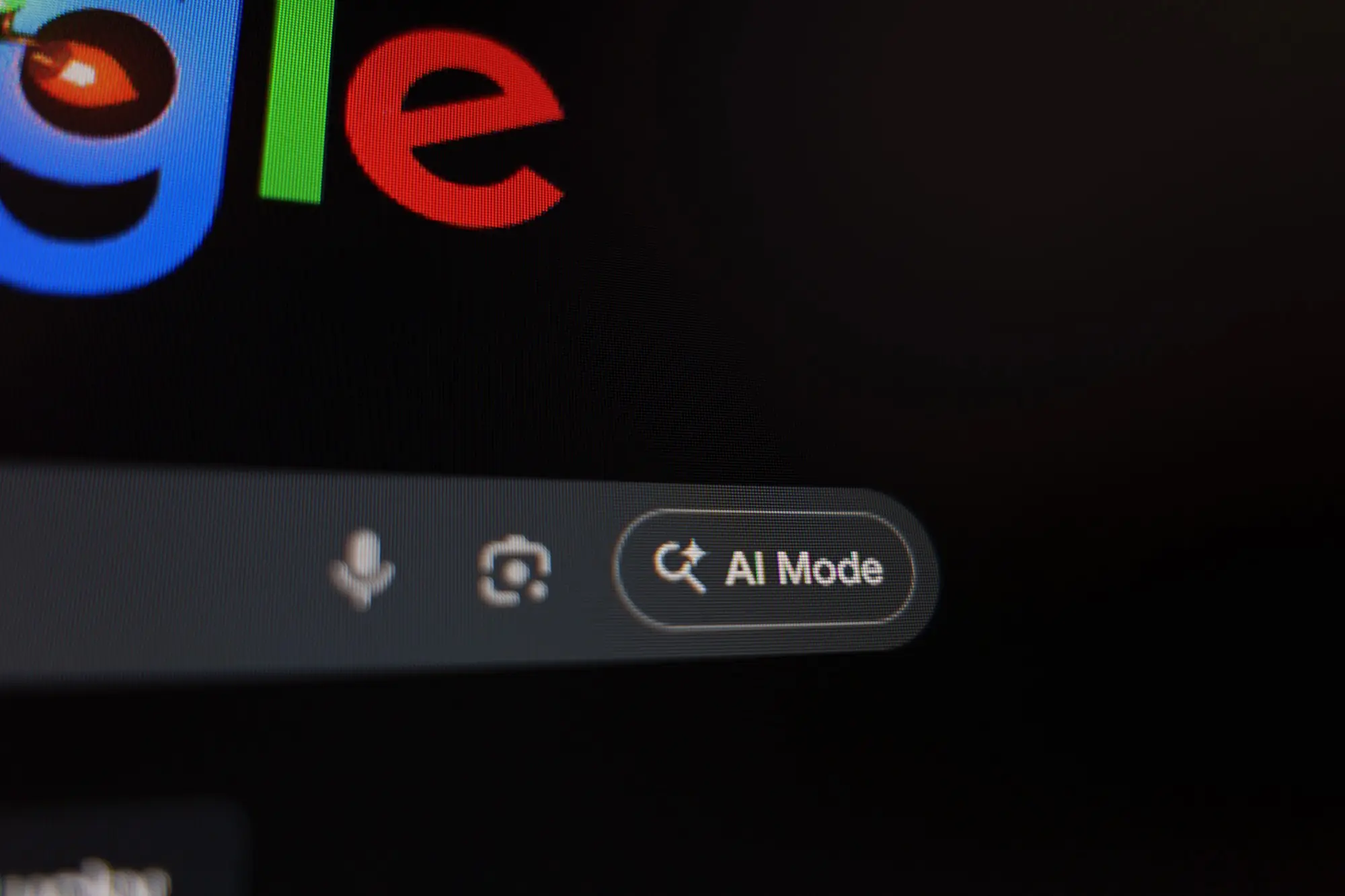
Search just changed in a way that directly affects your dental practice. In early June 2026, Google confirmed it is running a limited test of healthcare-related ads inside AI Mode. This conversational, AI-powered search experience has crossed 75 million daily active users. For dental practices, this isn’t a distant industry development. It’s a preview of the competitive landscape you’re about to operate in, and the time to prepare is right now. Understanding how to position your practice for getting your practice into AI search results has shifted from a long-term goal to an immediate strategic priority.
Here’s what happened, why it matters, and what your practice should be doing about it.
What Google Actually Confirmed
Google Ads Liaison Ginny Marvin confirmed the test publicly in response to questions on LinkedIn. In her own words: “Yes, we are beginning a small test of ads in AI Mode for the healthcare vertical (in the US for English queries).”
The eligible campaign types are Performance Max (PMax), AI Max with search terms matching, Shopping campaigns, and broad match. These are the same campaign types already eligible to serve ads in AI Overviews. There’s a catch in this initial phase, though: ads that use pinned assets or text disclaimers are not eligible, which narrows the pool of qualifying healthcare creatives.
Why is this significant? Healthcare has been one of the most tightly restricted verticals in Google’s AI advertising policy. When Google first expanded AI Overview ads beyond the US in late 2025, healthcare was explicitly excluded from the within-summary placement—the high-attention zone within the AI-generated response itself. Now that wall is coming down, at least in test form.
The test is small and US-only, and there is no confirmed timeline for broader rollout. But Google’s pattern is consistent: limited tests precede full launches, and healthcare practices that start preparing now will have a structural advantage when eligibility expands.
Why Dental Practices Should Pay Attention
Health-related queries account for roughly one billion Google searches per day. Dental searches (“dentist near me,” “dental implants cost,” “emergency dentist [city]”) represent a significant slice of that volume. Historically, those searches sent patients down a familiar path: Google returns a mix of organic results, local map pack listings, and paid ads at the top of the page.
AI Mode changes that path. Instead of scanning ten blue links, users are asking a conversational question and receiving a synthesized answer. The AI response occupies the top of the screen. Organic results appear further down, if at all. Research has found that health and nutrition verticals saw ad opportunity declines in the range of 40 to 50 percent throughout 2025, largely because AI Overviews were answering health queries directly and reducing click-through to both paid and organic results.
For dental practices, this means the playing field has already shifted — and healthcare ads in AI Mode represent the next step. If ads begin appearing within AI-generated responses to dental queries, practices positioned within that experience will be first in front of patients ready to book. Practices that aren’t prepared won’t be visible at all.
Understanding what AIO is and how it impacts search is the first step toward ensuring your practice doesn’t get left out of this shift.
What AI Mode Actually Is (And Why It’s Different)
Google’s AI Mode is not just another feature layered on top of traditional search. It is a fundamentally different way that patients interact with Google. Rather than entering a keyword and browsing results, users type or speak a full question and receive a conversational, AI-generated answer that synthesizes information from multiple sources.
What makes this consequential for dental advertisers specifically is the nature of the intent behind these queries. Someone asking AI Mode “what’s the best dental implant option for someone with bone loss?” or “how much does Invisalign typically cost in South Florida?” is further down the decision path than the average searcher. They’re not browsing. They’re evaluating. And an ad that appears within that AI-generated answer meets them at a moment of high intent — before they’ve clicked anywhere else.
This changes what competitive visibility means. Traditional search ad placement was about appearing at the top of a list. AI Mode ad placement is about being embedded in the answer itself. The practices that understand this distinction earliest will have the clearest advantage as the format scales.
How to Get Your Practice Into AI Search Results
Whether you’re focused on the paid side of AI Mode, the organic AI Overviews, or both, the underlying requirements are the same. AI systems — whether they’re selecting which ad to surface or which content to cite in a generated answer — reward practices that have structured, authoritative, and trustworthy digital presences. Here’s how to build one.
Audit Your Campaign Eligibility for AI Mode
If you’re currently running dental Google Ads campaigns, the first step is understanding which campaign types are eligible for AI Mode placements. Performance Max, AI Max with search terms matching, Shopping, and broad match are all in play. Standard search campaigns are not currently included in Google’s AI Mode ad rollout.
Review your active campaigns against this list and flag which ones could automatically enter the test as Google expands eligibility. Pay particular attention to creative assets: the initial test excludes pinned assets and text disclaimers, so healthcare practices that rely heavily on disclaimer language will need compliant creative variants ready to go.
Build Content That AI Systems Actually Cite
Paid ads in AI Mode aren’t the only form of visibility worth pursuing. Google’s AI Overviews and other AI-generated responses also surface organic content from dental practices that have built authoritative, well-structured websites.
The content that gets cited in AI-generated answers tends to share the same characteristics:
- It answers specific, conversational questions directly and concisely
- It is structured with clear headers, organized sections, and machine-readable formatting
- It is backed by demonstrated expertise, ideally with author credentials and accurate clinical information
- It is published on a technically sound website that loads quickly and performs well on mobile
The connection between your website development and AI search rankings is tighter than most practice owners realize. A slow site or poorly structured page won’t make it into an AI-generated answer, even if the underlying content is excellent.
Prioritize Local AI Visibility
Dental practices compete locally, and local queries in AI Mode have their own dynamics. When a patient asks AI Mode, “Who is the best dentist in Boca Raton for dental implants?” the AI response draws on a combination of your Google Business Profile data, your website content, your reviews, and signals about your authority within that geographic area.
This means your dental SEO foundation — accurate NAP (name, address, phone) data, optimized Google Business Profile, locally relevant content, and consistent citations across directories — feeds directly into your AI search visibility. Practices with strong local SEO fundamentals have a meaningful head start.
Align Your PPC Strategy With AI-Native Search Behavior
Patients using AI Mode ask longer, more conversational questions than traditional search users. That shift in behavior affects how your dental PPC campaigns should be structured. Broad match and AI Max with search terms matching are better equipped to capture this longer-tail, intent-rich traffic than narrow keyword-specific campaigns. Landing pages also need to be updated to answer the kinds of questions AI Mode users are asking — conversational, specific, and oriented toward next steps.
If your current landing pages are built around single keywords and generic practice overviews, they are not optimized for the AI-native user experience. Revising them to address specific patient questions and scenarios will improve both your organic AI citation rate and your paid ad quality signals.
Invest in Trust Signals AI Can Actually Read
Healthcare is a high-trust category. AI systems are calibrated to treat health information with additional scrutiny — the stakes of surfacing inaccurate medical content are higher than the stakes of surfacing the wrong product recommendation. This means practices that demonstrate expertise and authority through their online presence will have a structural advantage in AI search, both organic and paid.
Actionable trust signals include:
- Board-certified provider bios
- Structured FAQ content that addresses real patient questions
- Schema markup that identifies your practice as a local healthcare provider
- Reviews that mention specific treatments
- Content depth that shows genuine clinical knowledge
These aren’t just good SEO. They’re the inputs AI systems use to decide whether your practice is worth surfacing.
What to Watch For as the Test Expands
Google’s healthcare ad test in AI Mode is small today. It will not stay small. The platform’s pattern since launching AI Mode has been to open limited tests, gather performance data, refine the experience, and then expand eligibility broadly. Shopping ads in AI Mode went through the same process earlier in 2026. Healthcare is following the same trajectory.
Watch for several specific developments: expansion of eligible campaign types beyond PMax and broad match; relaxation of the current creative restrictions around disclaimers and pinned assets; and extension of the test to regulated verticals beyond healthcare, which would signal that Google is building a policy framework for AI Mode ads that could eventually cover all categories.
For dental practices, the practical implication is straightforward. The steps that position you for AI Mode ad eligibility — strong campaigns, well-structured content, local authority, trust signals — are the same steps that build organic AI search visibility. There’s no separate playbook. The investment compounds.
Start Getting Your Practice Into AI Search Results Before Your Competition Does
The dental practices that will win in AI search — both in the paid ad placements Google is now testing and in the organic AI-generated answers patients are already reading — are the ones building the right foundation today. That means structured, authoritative content. Technically sound websites. Strong local SEO signals. Campaigns that are built for conversational, high-intent queries.
This shift isn’t coming. It’s already here. Google’s confirmation of healthcare ads in AI Mode is the clearest signal yet that AI search is becoming the primary advertising battleground for dental practices, and the window to establish a position before the space gets crowded is narrow.
At Digital Resource, we specialize in dental marketing and AI search optimization strategies built for practices that want to grow. If you’re ready to make sure your practice is positioned for where search is heading, contact us today, and let’s build your strategy.
Recommended for You
What Amazon's Creator Ad Shift Means for Your PPC Strategy
A PPC agency breaks down Amazon's quiet rollout of creator ad placements and what it means for your Sponsored Products budget.
Google Folds Display Into Demand Gen: What It Means for Lead Generation Ads
Google is folding Display into Demand Gen. See what changes for lead generation ads, plus how similar-audience targeting returns to display prospecting.

Make every move a power play.
Stay informed with the latest marketing insights and winning strategies.