






.webp)
.svg)
5 Marketing Trends Reshaping How Brands Compete Right Now

Marketing has always evolved quickly, but the pace of change in 2026 is different in kind, not just in degree. It's not just new platforms or new ad formats. It's a shift in how marketing teams operate day-to-day, how consumers find answers before they ever click a link, and how trust is built between a brand and the people it's trying to reach. Brands that are winning right now aren't just producing more content or spending more on ads — they're rethinking the underlying systems that power their strategy.
Here are five trends shaping marketing in 2026, why they matter, and what brands should be doing about each one, including where generative engine optimization fits into the bigger picture.
1. Agentic AI Is Running Campaigns, Not Just Writing Copy

From Copywriter to Operator
For the past few years, AI in marketing meant one thing: generating text. Draft a caption, summarize a report, brainstorm headlines. That's no longer where the value sits. Agentic AI tools now manage entire workflows — adjusting ad bids in real time, triaging routine customer questions, and coordinating pieces of content production from brief to final asset.
According to HubSpot's 2026 State of Marketing data, the vast majority of marketers now use AI for content creation, and a large share specifically use it for media production tasks that once required a full team.
Where This Is Showing Up First
Agentic AI is showing up in a few specific places inside marketing operations:
- Campaign management: Automated bid adjustments and budget pacing based on real-time performance signals
- Customer engagement: AI handling first-touch responses so human reps can focus on complex requests
- Content production pipelines: Coordinating multimedia content creation from concept through delivery, with humans steering strategy and final approval
What This Means for Marketing Teams
The practical effect is a reallocation of time. Analysts at Gartner predict agentic AI will take over a meaningful share of customer engagement tasks in the near term, shifting marketing roles toward supervising these systems rather than executing every task by hand. That doesn't mean less human involvement — it means human involvement moves upstream, into strategy, brand voice, and quality control, which is exactly where it should be.
Teams that treat AI as a production assistant rather than a replacement are the ones seeing the cleanest results, a pattern that shows up consistently in current AI content tools built for marketers.
2. Generative Engine Optimization Is the New Front Door to Search
Why AI Answer Engines Are Changing the First Click
Search used to mean a list of blue links. Increasingly, it means a direct, AI-generated answer with no click required at all. Google's own Search Console now separates AI Overviews and AI Mode impressions from standard organic data, a change that finally lets brands see how they're performing inside these AI-generated answers rather than lumping that visibility in with traditional rankings.
That single reporting change signals how central AI-mediated search has become to how consumers actually find information.
How Generative Engine Optimization Differs From Traditional SEO
Generative engine optimization isn't a replacement for SEO — it's an extension of it, built around a different goal. Traditional SEO optimizes for ranking; GEO optimizes for being cited, summarized, or directly quoted inside an AI-generated response. That means:
- Clear, direct definitions early in a page or section, not buried in the middle
- Specific data points and figures an AI model can pull and cite with confidence
- Clean structural formatting — headers, lists, and short answers — that AI tools can parse easily
- Established topical authority built over time, not stuffed into a single page
Where to Start With GEO
Brands don't need to abandon existing SEO investment to start improving their generative engine optimization; they need to build on it. Auditing how a brand currently appears in AI-generated answers is the logical first step, and it's a process worth understanding in more depth through a full breakdown of what AI optimization actually involves. From there, the fix is usually structural — reorganizing what's already on the page rather than starting from scratch.
3. Short-Form Video Still Owns the Feed

The Continued Dominance of TikTok, Shorts, and Reels
Short-form video isn't a passing platform trend at this point — it's the default format consumers reach for first. Recent data puts videos under 60 seconds at generating notably higher engagement per impression than any other content type, and video overall is now used by the overwhelming majority of businesses as a marketing tool.
For brands still treating short-form video as a secondary channel, the numbers suggest that's a mistake worth correcting.
Episodic and Lo-Fi Beats Polished
What's changed just as much as the platforms is the style. Bite-sized, non-linear, episodic content is consistently outperforming heavily produced ad campaigns. Viewers can tell the difference between something built for a feed and something built for a boardroom, and they favor the former.
This doesn't mean quality doesn't matter — it means the definition of quality has shifted toward authenticity and pacing rather than production value.
Formats Worth Testing Right Now
A few formats are proving especially effective for brands experimenting with social media marketing right now:
- Quick-hook, vertical-first videos designed for silent autoplay
- Serialized content that keeps an audience coming back episode to episode
- Behind-the-scenes or process-style clips that feel unscripted, even when they aren't
4. Authentic UGC Is Outperforming Polished Influencer Campaigns
Why Consumers Trust Peers Over Polish
Consumers are increasingly skeptical of anything that feels like a paid endorsement, and they're gravitating toward raw, unscripted content from actual customers instead. The user-generated content platform market has grown substantially over the past year alone, a clear signal that brands are shifting budget toward this kind of authentic social proof rather than traditional celebrity or influencer partnerships.
What This Means for Creator Strategy
This shift doesn't eliminate creator partnerships — it changes what brands should look for in them. Instead of prioritizing follower count or production polish, brands are increasingly working with creators who can produce content that feels indistinguishable from organic customer posts.
That authenticity also connects directly to how a brand's online reputation gets built over time, since UGC and reviews are increasingly viewed by consumers as the same category of trust signal.
5. First-Party Data and CTV Are Filling the Privacy Gap
Cookie Deprecation Is Forcing a Rethink of Targeting
Stricter privacy regulation and the ongoing deprecation of third-party cookies have made old-school retargeting far less reliable. Brands that built their entire acquisition strategy around third-party tracking are now scrambling to rebuild it around data they actually own.
Retail Media and Loyalty Data as the New Foundation
Retail media networks and first-party loyalty programs have stepped into that gap. Retail media's closed-loop attribution — tying ad exposure directly to purchase data the retailer already owns — is driving strong return on ad spend for brands willing to shift budget in that direction, particularly in CPG and retail categories. It's a trend worth watching closely for any brand running digital ad campaigns that historically leaned on broad, cookie-based targeting.
CTV's Growing Role in the Media Mix
Connected TV has quietly become one of the more effective owned-data channels available. Shoppable CTV formats are converting at multiples of standard video ad rates, and that share of the connected TV ad market is expected to keep climbing through the rest of the year. For brands with the audience and budget to test it, CTV increasingly offers the kind of targeting precision that used to require third-party cookies to pull off.
What These Trends Have in Common
Taken individually, these five shifts look like five separate to-do lists. Taken together, they point to one underlying truth: marketing is becoming an operations discipline as much as a creative one. Agentic AI is reshaping the back end of how campaigns run. Generative engine optimization and short-form video are reshaping the front end of how brands get discovered. UGC and first-party data are reshaping how trust and targeting get built without relying on borrowed attention or borrowed data.
Brands that try to tackle these trends one at a time, in isolation, tend to fall behind brands treating them as pieces of a single integrated strategy — a pattern that's especially visible in how SEO, AEO, and GEO are increasingly managed as one connected search strategy rather than separate line items.

Building a Generative Engine Optimization Strategy That Covers All Five Trends
None of these five trends exist in a vacuum, and trying to chase each one with a separate vendor or a separate strategy is a fast way to end up with a fragmented marketing program. The brands seeing real traction in 2026 are the ones building a single strategy where content, search visibility, paid media, and reputation all reinforce each other — with generative engine optimization acting as the connective thread tying search, content, and authority together.
That's the kind of integrated approach Digital Resource builds for clients across every one of these areas, from AI-driven content workflows to first-party data strategy. If your current marketing plan feels like it's chasing trends instead of building on them, your free marketing analysis with Digital Resource is a good place to find out where the gaps are.
Get in touch with our team today to get started!
Recommended for You
How to Build a Content Strategy That Gets Cited by AI Search Tools
AI Overviews and chatbots are changing how people find your business. Learn how to build an AI search content strategy that earns citations and trust.
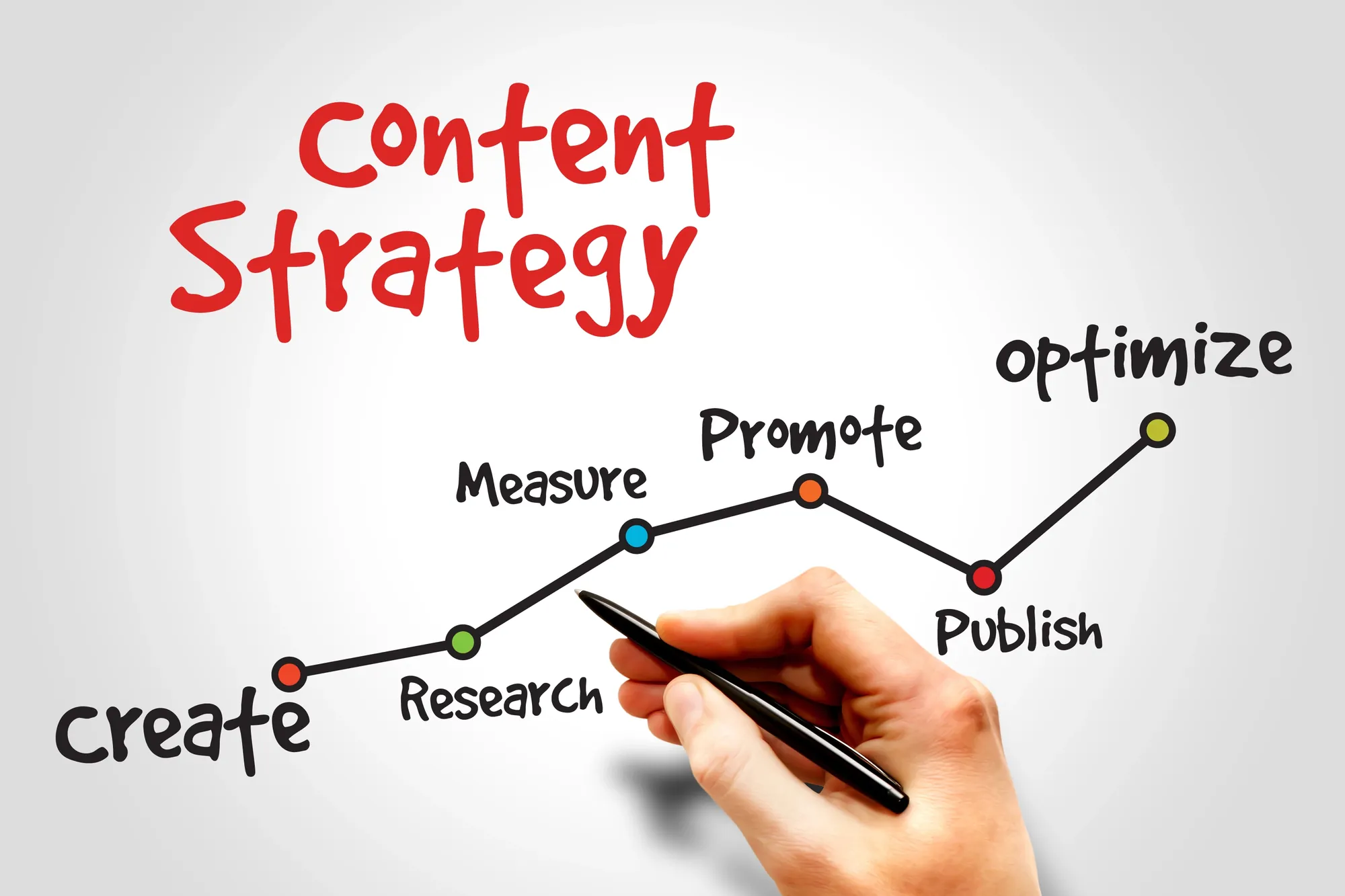
How to Evaluate and Choose the Right Content Strategy for Your Business
Not every content strategy agency builds the same playbook. See how to evaluate your options and align your strategy with your industry and goals.

ChatGPT Optimization 101: What OpenAI's New Ads Change
OpenAI now shows ads inside ChatGPT, changing how brands earn visibility. Learn what ChatGPT optimization means for your marketing strategy and where to start.
How to Become the Source: Getting Your Brand Cited by ChatGPT and Gemini
Learn how a content marketing agency helps your brand earn citations from ChatGPT and Gemini with structured, authoritative, AI-ready content.

Make every move a power play.
Stay informed with the latest marketing insights and winning strategies.