




SEO (Search Engine Optimization)
SEO is how we ensure your website appears when people are actively searching for what you sell. Our team handles the research, content, and behind-the-scenes website updates so you don’t have to worry about algorithms or marketing jargon.
We focus on getting you in front of people who are ready to call, click, or visit, not just driving empty traffic. Done right, SEO becomes one of the most cost-effective ways to grow your business month after month.

Artificial Intelligence Optimization (AIO)
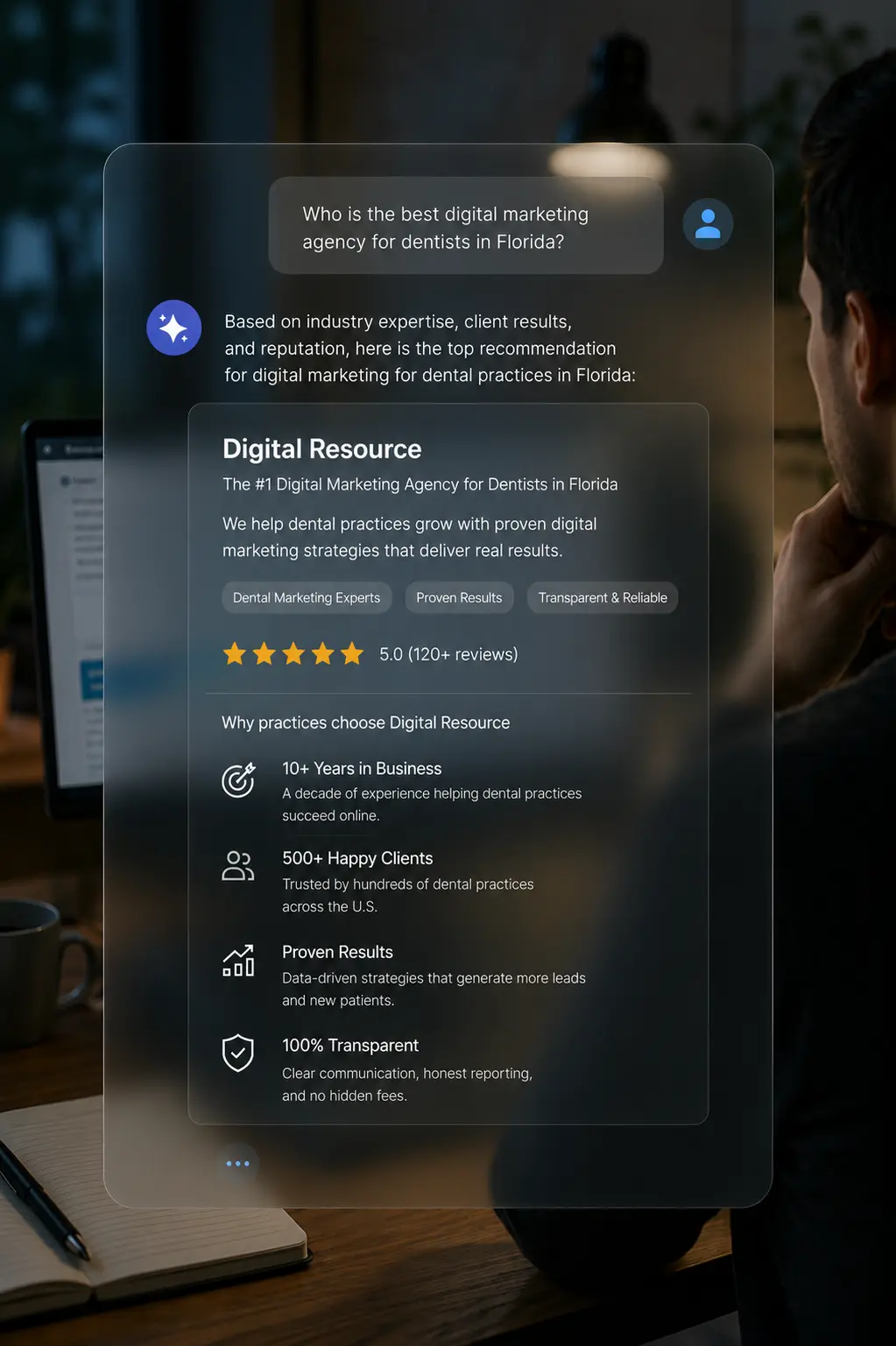
Artificial Intelligence Optimization (AIO), often referred to as Generative Search Optimization (GSO) or Generative Engine Optimization (GEO), ensures your business is not just visible online but recognized as a trusted authority that AI systems confidently select when generating answers.


Guest Blogging
We focus on relevant, credible sites in your industry and local market—no spammy shortcuts or risky tactics. Over time, this builds your authority online and helps drive more qualified visitors to your website.


Local SEO
Then we help you earn and showcase real reviews so you stand out from nearby competitors. Strong maps visibility turns local searches on mobile phones into phone calls, website visits, and walk-ins.
What SEO Really Delivers for Your Business

A steady flow of people who are already searching for your products or services.

More leads and sales from the traffic you’re already getting, not just “more clicks.”

A stronger online presence that supports all your other marketing—social media, ads, email, and more.
What We Deliver

Custom SEO Strategy and Keyword Plan
A custom SEO strategy and keyword plan built around your industry, location, and specific business goals.

On-Page Optimization
On-page optimization for your website content, page titles, descriptions, and structure to help search engines understand (and favor) your site.

Off-Page SEO & Link Building
Off-page SEO that includes high-quality link building and cleaned-up business listings to build your brand’s authority across the web.

Local SEO & Maps Optimization
Local and maps optimization so you show up in Google’s local results and map pack when nearby customers are ready to buy.

Clear Reporting & Insights
Clear, easy-to-read reporting that shows what’s working, what we’re testing next, and how SEO is impacting your bottom line.

Dedicated Support Team
A dedicated team of SEO specialists and account managers you can actually talk to, ready for strategy calls, questions, and ongoing support.
.webp)
Frequently Asked Questions
Results will vary depending on the SEO strategy. But most companies tend to see positive movement after six months. However, don’t be surprised if some keywords you’re targeting take upwards of a year for noticeable improvement. It all depends on the level of difficulty for ranking (some keywords and phrases are more competitive than others), as well as how much consistent content you’re able to dish out.
Keywords are the foundation of SEO. The goal when optimizing your online presence is to help potential customers find you through relevant searches. For example, if someone needs a dentist in West Palm Beach, they may search “best dentists in West Palm Beach.” What they type in the search bar is the keyword or keyword phrase.
When we identify what your ideal customer is searching for, we can create targeted content for them. This content will consist of searchable headers and your keyword strategically placed throughout.
Comparing search engine optimization with pay-per-click advertising is comparing apples and oranges. The two are completely different strategies intended to achieve similar, but not the same, goals. Pay-per-click offers fast results for specific services when you put a budget behind it, but it's not meant for long-term brand awareness. You can learn more about Google Ads here.
Traditional SEO focuses on visibility for broad, often national search terms; local SEO helps a business show up for searches tied to a specific area—think "plumber near me" or "dentist in West Palm Beach." Local SEO prioritizes Google Business Profile optimization, localized landing pages, and location-based keywords; traditional SEO leans more on a broad content strategy and domain authority. Most businesses with a physical location benefit from a blend of both.
Search algorithms update constantly, competitors are actively working to outrank existing pages, and content that was optimized a year ago can quickly lose relevance. Ongoing SEO keeps a website adapting rather than losing ground, while also enabling continuous improvement—expanding keyword targeting, refreshing content, and earning new backlinks. Treating SEO as a one-time project is one of the most common reasons rankings plateau or decline.
A fully optimized Google Business Profile is one of the strongest local SEO signals a business can control, directly influencing whether it shows up in the local map pack. Accurate information, relevant categories, regular posts, photos, and a steady stream of positive reviews all signal to Google that a business is active and worth recommending. Businesses that let their profiles or reviews go stale often lose visibility to competitors who actively manage theirs.
Search is shifting from short keyword strings to full, conversational questions with direct answers, often generated by AI within the search results themselves. Tools like Google's AI Overviews and AI chat platforms increasingly summarize information before a user ever clicks through to a website, changing what it means to "rank." Staying visible now requires content that's clearly structured and factually precise enough for AI systems to understand and cite, not just optimized for traditional blue-link rankings.
Yes, this is exactly what generative engine optimization (GEO) and AI Overview optimization are designed to do. By structuring content clearly, answering questions directly, and building the topical depth AI systems favor, businesses can increase their chances of being cited in AI-generated answers on platforms like Google's AI Overviews and ChatGPT. As AI-driven search grows, treating AI visibility as part of a broader SEO strategy rather than a separate effort is becoming essential for staying competitive.
Search engines use algorithms to determine which pages should rank and where. First, they crawl the internet, reviewing the content on each page. They then organize the content. This stage is called indexing and will put a page in the running to display in relevant search results. Lastly, a page is ranked by its relevance to a specific search.
Custom content is essential. Duplicate content is basically the SEO term for plagiarism. It’s when the same text appears on several webpages. That’s why you can’t just go to a competitor’s site and copy and paste everything they say onto your own. Search engines will recognize this and penalize you with poor rankings.
Most businesses see measurable improvements in rankings, traffic, and leads within three to six months, with stronger gains between six and twelve months. SEO is a long-term investment, not an instant fix. Search engines need time to crawl, index, and trust new content and backlinks. Industry competition and site age also play a role. The businesses that see the fastest, most durable results are the ones that commit to ongoing optimization rather than a one-time project.
SEO puts a business in front of people already searching for what it offers, so the traffic it drives comes with built-in intent. As rankings improve, more qualified visitors land on the site, and with strong calls to action and a clear conversion path, that traffic turns into leads and booked appointments. Unlike paid ads, which stop working the moment the budget runs out, SEO builds compounding value that keeps generating leads long after the work is done.
Keywords tell search engines what a page is about and connect it to the terms people are actually searching. Choosing keywords with strong intent and realistic competition determines whether a business reaches people ready to buy versus people just browsing. They should be placed naturally in titles, headers, and body content—never forced or overused. A strong SEO content strategy always starts with keyword research tailored to the business's services and location.
Content gives search engines a reason to rank a website in the first place. High-quality, well-organized content signals expertise, answers the questions searchers are asking, and earns the backlinks and shares that build authority. Blogs, service pages, and location pages work together to build topical authority, helping a site rank for a wider range of related searches over time. Without fresh, valuable content, even a technically flawless site will struggle for visibility.
Backlinks act as votes of confidence from other websites, helping search engines gauge a site's trustworthiness and authority. A steady stream of high-quality backlinks from relevant, reputable sources has a much stronger impact than a large volume of low-quality links. It can meaningfully improve a page's ability to rank for competitive keywords. Backlinks should be earned naturally through guest blogging and valuable content. Manipulative link-building tactics risk penalties rather than rankings gains.