







.webp)
.svg)
How to Evaluate and Choose the Right Content Strategy for Your Business
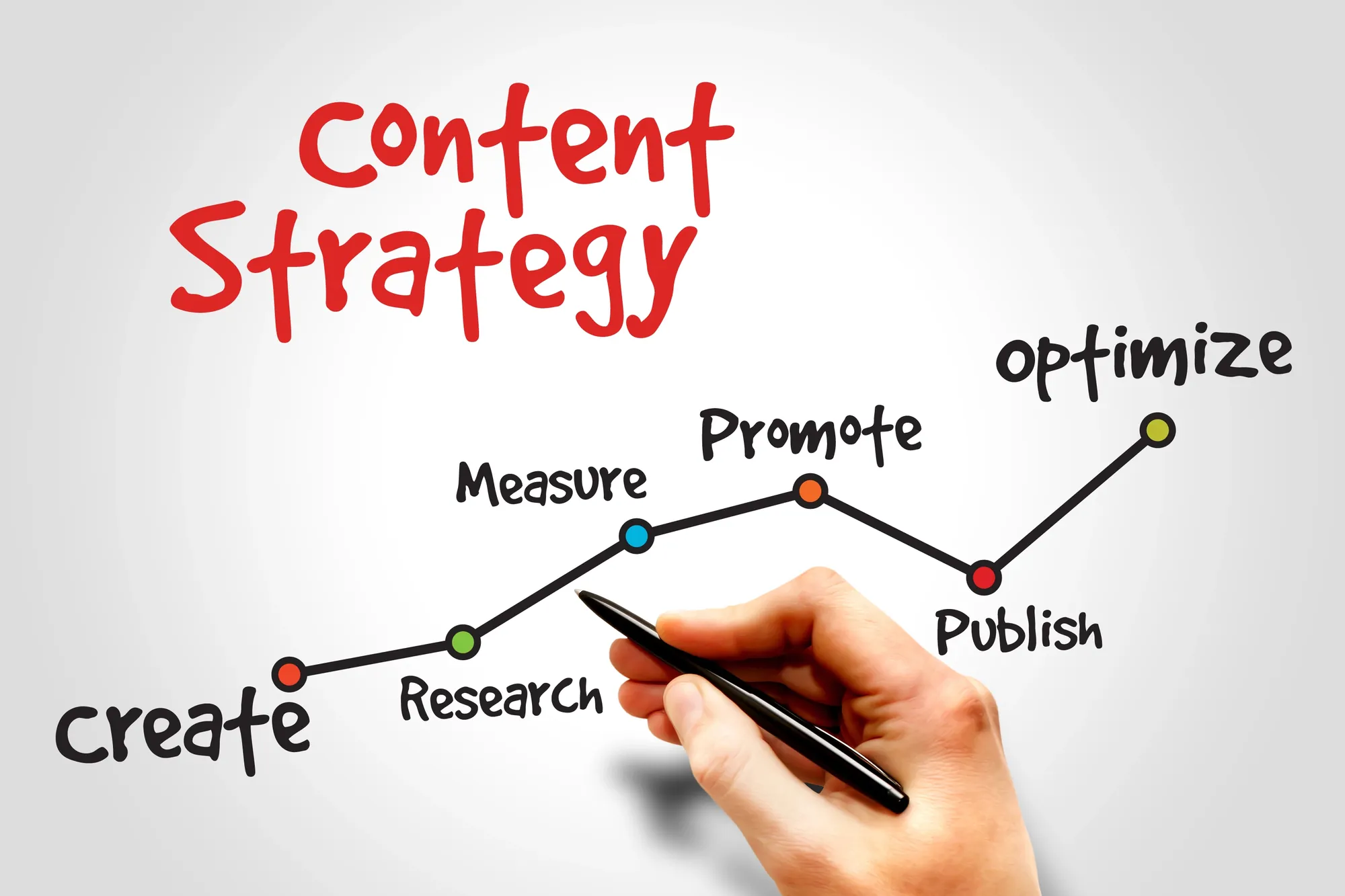
Most businesses that feel let down by content marketing didn't actually fail at content — they failed at strategy. They published consistently, hit their word counts, and still saw nothing move. The missing piece usually isn't effort; it's a plan tailored to their specific business, audience, and industry, rather than a generic template stretched to fit.
Whether you're building this in-house or evaluating a content strategy agency, here's how to tell a strategy that's actually built for your business from one that just looks busy.
Why Content Strategy Isn't One-Size-Fits-All

Before getting into evaluation criteria, it helps to separate two things that are often treated as the same but aren't: having a plan and having a calendar.
The Difference Between a Content Calendar and a Content Strategy
A content calendar tells you what's publishing and when. A content strategy tells you why each piece exists, who it's for, and what it's supposed to accomplish. A vast majority of marketers report having some kind of content strategy. Still, the effectiveness of that strategy varies enormously depending on how deliberately it was built.
Copywriting that reads well on its own can still fail if it isn't tied to a larger plan; polished sentences don't fix an unclear purpose.
Why Industry Context Changes Everything
A dental practice and a SaaS company both need content, but they're solving completely different problems. One is building local trust and driving appointment bookings; the other is educating a longer, more research-heavy buying cycle. A strategy that ignores those differences ends up generic by default, regardless of how well-written the individual pieces are.
The Cost of a Generic, Copy-Paste Strategy
When a strategy isn't tailored, it tends to default to whatever's easiest to produce rather than what actually moves the business forward. That mismatch shows up as content that gets published but never really works — the exact trap the research above is describing. Over time, this also erodes trust in content marketing internally, making it harder to get buy-in for the next round of investment.
How to Evaluate a Content Strategy Before Committing to It
Once you understand why generic doesn't work, the next step is knowing what to actually check for before greenlighting a strategy — whether it's coming from an internal team or an outside partner.
Does It Tie to a Business Goal?
Every piece of content should connect back to something measurable: leads, bookings, retention, or brand visibility. If a strategy can't explain how a given topic supports a specific goal, that's a sign the plan was built around content ideas rather than business outcomes. This is one of the fastest ways to separate a strategic partner from a vendor that's simply filling a quota.
Is It Built Around Your Actual Audience?
A strategy built on assumptions about "the audience" in general is very different from one built on how your specific customers actually search, what questions they ask, and where they are in their decision process. The best content strategies tend to start with research into search intent and existing site performance, not a blank-page brainstorm.
Does It Account for Your Sales Cycle?
A strategy that treats a 10-minute purchase decision the same as a six-month B2B sales cycle will underperform in one direction or the other. The content mix, depth, and tone all need to reflect how long people actually take to decide, and how many touchpoints they typically need before they're ready to commit.
Can It Be Measured?
If a strategy doesn't define what success looks like upfront, there's no way to tell later whether it worked. Measuring content effectiveness remains one of the most commonly cited ongoing challenges among marketers, which makes building measurement from the start even more important, not less.
Waiting until after launch to figure out what to track almost always means losing the first few months of usable data.

Matching Content Strategy to Industry
With the evaluation criteria in place, it's worth looking at what a genuinely tailored strategy actually looks like once industry context gets factored in — since "good content strategy" means something different depending on the business behind it.
E-Commerce and Retail
For e-commerce, content needs to work at the point of decision, not just in the awareness stage. One 2025 e-commerce study found that category and product pages drove roughly 68% of assisted conversions, compared to just 19% from blog posts.
That doesn't mean blogging is worthless for online retailers — it means strategy here should prioritize strong product-page copy, buying guides, and comparison content alongside any blog presence, rather than treating blog volume as the whole plan.
A content marketing approach for e-commerce should allocate resources accordingly, investing real effort in the pages closest to the actual purchase decision.
B2B and SaaS
B2B buyers research extensively before ever reaching out, often consuming multiple pieces of content across a longer cycle. Strategy here typically leans on in-depth guides, case studies, and content that builds credibility over several touchpoints rather than a single conversion-focused page.
Topic clusters tend to perform especially well in this space, since they let a business build authority around a subject rather than competing piece by piece.
Local Service Businesses
For plumbers, electricians, contractors, and similar local businesses, content strategy is less about long-form authority-building and more about local relevance. Consumers are significantly more likely to consider a business reputable when they find a complete, well-maintained Google Business Profile alongside consistent local content.
Strategy here should prioritize service-area pages, seasonal content, and material that answers immediate, practical questions, since the goal is to show up at the exact moment someone nearby needs the service — not to build a long-term content library that a homeowner will never revisit.
Healthcare and Dental Practices
Healthcare and dental content carries a unique trust burden, since patients are making decisions that involve their health, and often their comfort with an unfamiliar provider. Recent research found that most patients use online reviews at least occasionally when researching a new doctor or healthcare professional, which means content strategy in this space can't stop at blog posts.
It has to account for how reviews, provider bios, and procedure explanations work together to build trust before a patient ever calls.
Content here benefits from clear, reassuring information and material that reduces anxiety around procedures rather than purely SEO-driven blog volume for its own sake.
Franchise and Multi-Location Brands
Franchises face a different challenge entirely: consistency across locations without losing local relevance. A strong franchise content strategy balances brand-level messaging with location-specific content, so each market still feels locally relevant rather than like a copy-pasted template.
This often means building a core set of brand-approved messaging and themes, then adapting the specifics — local landmarks, regional promotions, location-specific staff — for each market individually.
Signs Your Current Content Strategy Needs a Reset
Even a strategy that made sense a year or two ago can quietly stop working as a business, audience, or industry shifts. This makes it worth periodically checking for a few warning signs.
Content That Doesn't Convert
If content is generating traffic but that traffic never translates into leads or bookings, the strategy is likely misaligned with actual buyer intent, even if the volume looks healthy on paper. This is often the clearest sign that content was built around keywords in isolation, rather than around what a real prospect needs to see before taking action.
Inconsistent Publishing with No Clear Throughline
Content published in bursts, without a clear connecting thread between pieces, tends to read as scattered rather than authoritative — a sign that the underlying strategy was never fully defined in the first place. Readers and search engines both pick up on this pattern over time, even if no single post looks obviously weak on its own.
No Way to Tie Content Back to Revenue
If there's no clear line between content efforts and business results, it's difficult to justify continued investment or know what to adjust. This is often the clearest sign that measurement should have been built into the strategy from day one, rather than added on as an afterthought once leadership starts asking questions.
Building a Strategy That Actually Fits
The throughline across every industry example above is the same: content strategy works when it's built around how a specific business actually operates and how its specific customers actually decide — not around a generic best-practices template. That distinction is often the entire difference between content that quietly builds momentum over time and content that just adds to the noise.
None of this requires reinventing the wheel for every new piece of content. It requires a clear content strategy framework up front (goals, audience, sales cycle, and measurement) that every future blog or web content piece is checked against before it's created.

What to Look for in a Content Strategy Agency
A content strategy agency worth working with should be able to explain, in plain terms, how their approach connects to your specific goals, audience, and industry — not just how many blog posts or assets they can produce in a month. Ask how they measure success, how they'd adjust the plan if something isn't working, and whether they've built strategies for businesses with a similar sales cycle or customer base to yours.
Content produced without a real strategy behind it can still look polished. Still, it rarely compounds the way strategic content does. If your current content efforts feel more like activity than progress, it may be time for a second look at the plan behind them. Get in touch with our team to talk through what a tailored content strategy could look like for your business.
Recommended for You

SEO Content Writing Services: How to Rank and Get Cited by AI
SEO content writing services now need to rank and earn AI citations. See what AI search rewards and why service pages matter more than ever.

How to Build a Content Strategy That Gets Cited by AI Search Tools
AI Overviews and chatbots are changing how people find your business. Learn how to build an AI search content strategy that earns citations and trust.

5 Marketing Trends Reshaping How Brands Compete Right Now
From agentic AI to generative engine optimization, here are five marketing trends worth acting on now — and how to put them to work.

ChatGPT Optimization 101: What OpenAI's New Ads Change
OpenAI now shows ads inside ChatGPT, changing how brands earn visibility. Learn what ChatGPT optimization means for your marketing strategy and where to start.

Make every move a power play.
Stay informed with the latest marketing insights and winning strategies.